How to sort a shopping list by store aisle
Write down your shop's route once, merge repeated ingredients, then group every line by section so the weekly shop becomes a single pass with no doubling back.

A list written in the order ingredients came to mind sends you back and forth across the shop: lemons, then milk, then back to produce for the parsley you missed. Sorting the list by aisle before you leave turns it into a route. You walk through once, pick things up in order, and finish without doubling back.
Write down your shop's route once
Every shop is laid out a little differently, so the first job is to note the order of your usual one. You only need the sections, not every shelf. A typical route might look like this:
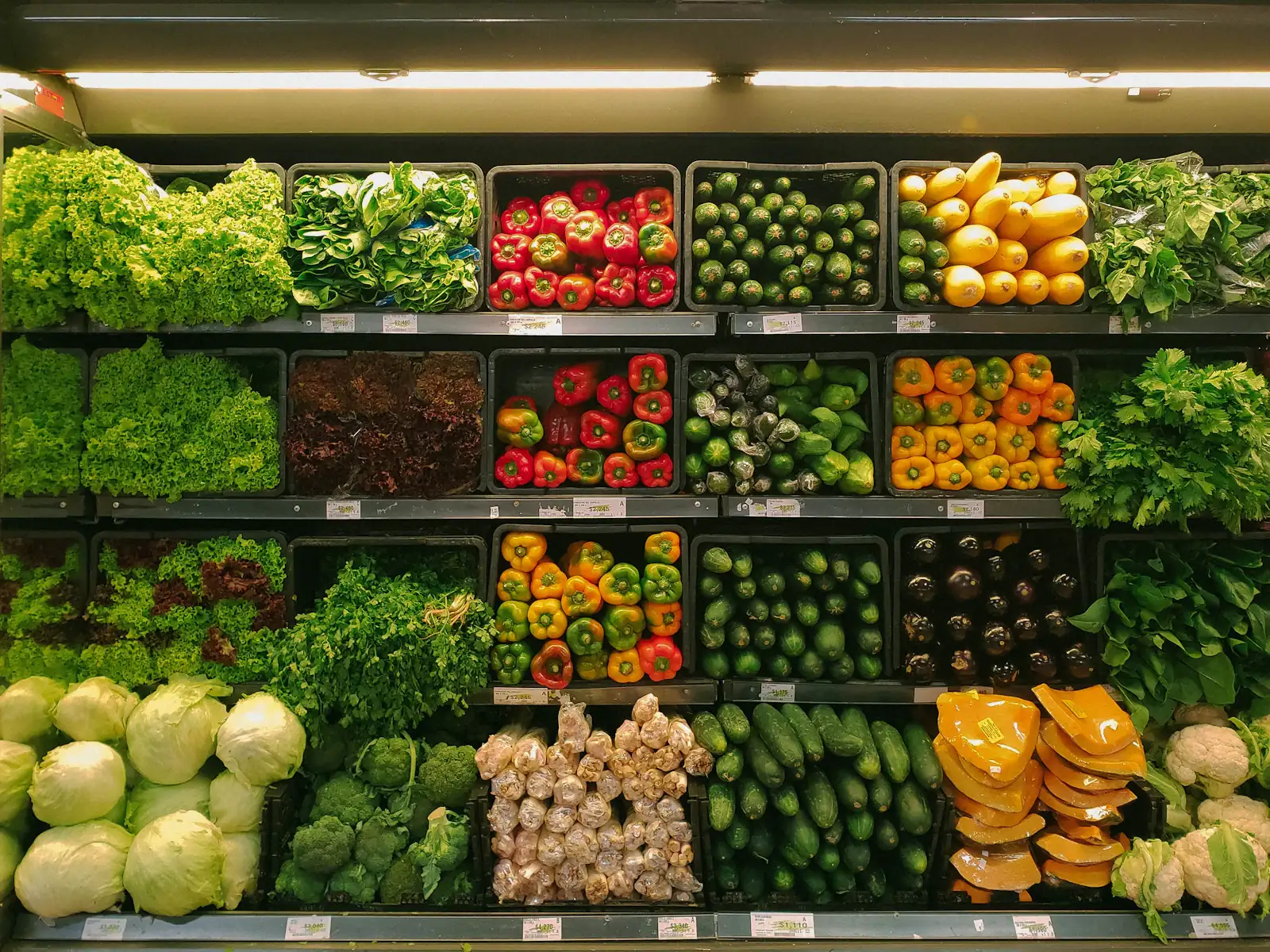
- Fruit and vegetables
- Bakery
- Meat and fish
- Dairy and eggs
- Tins, jars and dry goods
- Frozen
- Household and cleaning
Walk it once with the list in hand and adjust the order to match what you see. Keep this route as a template at the top of a note or a sheet of paper, with blank space under each heading. Next week you only fill in the gaps.
Frozen last, if the layout allows
Leave frozen food until the end of the route where you can. It spends less time in the trolley, which matters on a warm day or a long drive home. Chilled items like dairy and fish fit just before it.
Merge before you sort
Sorting a list that still has duplicates on it only moves the problem around. Combine first. If Monday's curry needs one onion and Thursday's soup needs two, write "onions, 3" once under produce. Convert units as you go: one medium onion is roughly 150 g chopped, and recipes that call for a tablespoon of herbs here and there usually add up to a single bunch.
Paper, notes app or spreadsheet
All three work. The format matters less than keeping the section headings in the same order every week.
- Paper is fast to write and easy to tick in the shop. A printed sheet with the section headings saves rewriting them.
- A phone notes app with a checklist lets you reorder lines by dragging and keeps the list with you if plans change.
- A spreadsheet suits people who like a column for quantity or a rough price. Sort by a "section" column and the order takes care of itself.
In the shop
Tick items as they go into the basket, not when you think of them. If something is out of stock, write the substitute next to it so the recipe still makes sense when you cook. And if you pass something that is not on the list, ask whether it belongs in a planned meal before it goes in the trolley.
After two or three shops the headings become habit, and sorting the list takes a few minutes.
Where to go next
A sorted list works best when the recipes behind it share ingredients. Read how to plan meals around overlapping ingredients to make the list shorter before you sort it. Planner apps such as Recipe2Shop can group a list by section for you; check the official site for what it supports.